


Wonder Blast
4.6287.00 Reviews
App Specs
- Version
- 56097599
- Updated On
- License
- Free
- Downloads
- 1,000,000+
- Developer
- Fugo Games
- Categories
- Puzzle
- Platform
- Android
Screenshots
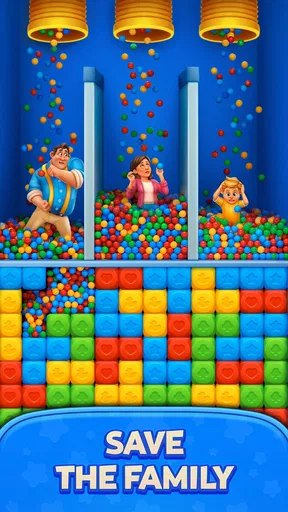
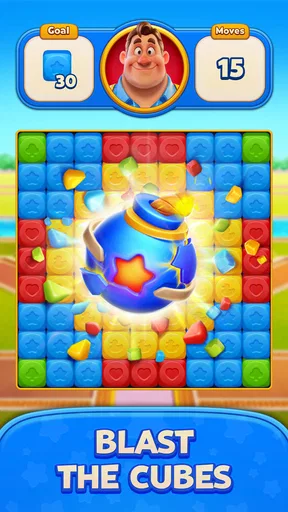
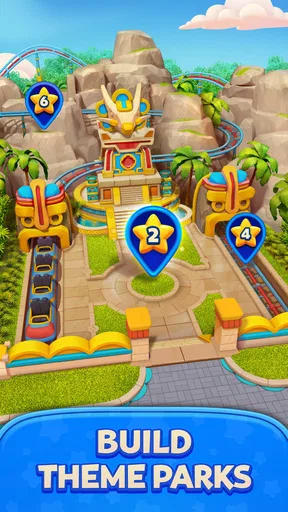


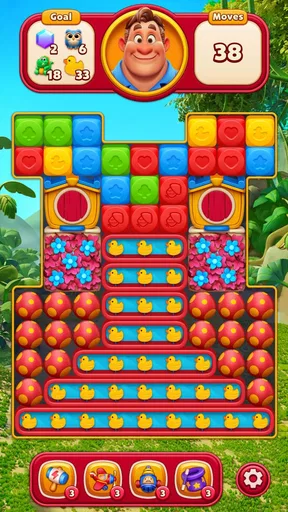
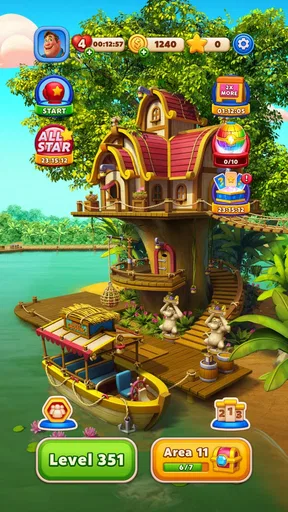

 Analysis by AppCompare
I like puzzle games that make progress feel immediate without demanding a long tutorial, and Wonder Blast is built around that appeal. This free puzzle game from Fugo Games puts the Wilson Family at the center of an adventure where the main activity is solving blast puzzles. The idea is easy to understand: look at the board, find useful groups, tap carefully, and use each move to open a path through the current challenge.
That simplicity is also the reason I can see myself recommending it to someone who wants a light game for short breaks. It is available to players rated Everyone, works on devices running Android 8.0 or later, and has passed the one-million-install mark. Its average rating sits at 4.6 from roughly twenty-one thousand ratings, which suggests that the straightforward format has found a sizeable audience.
Why the blast-puzzle idea matters
The most important capability here is not merely that blocks disappear. It is the way a single tap can turn a crowded board into a small planning problem. Instead of controlling a character directly or matching pieces in a strict sequence, I am usually thinking about which group is worth breaking now and which arrangement I should preserve for a stronger move later.
That distinction gives Wonder Blast a different rhythm from a basic match-three game. In a traditional match-three title, I often scan for a line or swap. Here, the useful decision is more local: identify a connected cluster, judge what it will clear, and consider how the remaining pieces may settle afterward. The result feels less frantic and more deliberate, even when the board is visually busy.
The real strength is controlled simplicity: the rules are approachable, but a careless tap can still make the next few moves less comfortable. That makes each level suitable for a quick session while leaving enough room for better decision-making. I do not need to memorize complicated controls, yet I also cannot treat every available group as equally valuable.
The family-adventure framing gives the puzzles a sense of direction rather than making them feel like an endless stack of unrelated boards. I found that useful when I wanted a reason to continue beyond one successful clear. The story is not the sole reason to play, but it helps the progression feel more like a journey than a collection of isolated taps.
How I approach a board
My first habit is to avoid tapping the largest visible group automatically. A large cluster can be attractive because it promises an immediate clear, but the better move may be a smaller group that opens access to several useful clusters. I look at the surrounding pieces first, especially areas that seem likely to become connected after the current move.
Worth Reading Before You Choose

EA SPORTS FC Mobile 26 Is a Bigger Football Game, but It Takes Time

Flipboard Shows What News Apps Must Do Beyond the Feed

Switching to Android Auto Means Rethinking Your Driving Routine

Google Calendar Makes a Crowded Week Easier to Manage

Ludo King Makes the Most of the Minutes Between Plans

Baby Panda World Brings Quick Play to Modern Phones, but Its Game Library Feels Busy
This is one of the less obvious lessons of the game: the best move is often the one that improves the next board state, not the one that produces the biggest instant effect. If I am playing while distracted, I tend to spend a promising arrangement too early. When I slow down for a few seconds, I make fewer moves that leave isolated pieces scattered around the board.
The same approach helps when I am playing on a phone with a smaller screen. Rather than tapping as soon as I notice a matching group, I pause and inspect the whole visible layout. That small pause reduces accidental decisions and makes the game feel more like a puzzle than a reflex test. It is a practical habit for commuting or waiting in a queue, where attention may come and go.
Another useful routine is to treat the lower part of the board as important even when the upper area looks more rewarding. Clearing below can change what becomes available above, so I try not to judge a move only by the pieces directly beside it. This makes the game more interesting than simply hunting for the largest cluster on screen.
A realistic short-break scenario
I think the best everyday use for Wonder Blast is a ten-minute pause between tasks. If I have finished an appointment early or am waiting for food, I can open it, solve a few puzzles, and stop without needing to remember a complicated control scheme. The blast format makes the first move obvious enough to begin quickly, while the board still gives me a reason to pay attention.
It also works well when I want something quieter than an action game. There is no need to manage a virtual character, learn a large control layout, or keep track of a long chain of inputs. I can focus on the arrangement in front of me and decide whether I want to play cautiously or simply make progress.
For parents looking for an Everyone-rated puzzle game, the accessible rules may be appealing. I would still judge it by the individual player’s tolerance for repetition and optional spending, but the basic interaction is easy to explain. A child or casual player can understand the central action quickly, while a more patient player can practice planning rather than tapping randomly.
On the other hand, I would not choose it as my first option for a long, story-heavy gaming session. The family adventure gives the game context, but the main attraction remains the board-clearing loop. Someone seeking deep character development, exploration, or a highly demanding puzzle system may find the experience too focused on short-form levels.
Where it differs from familiar puzzle alternatives
Compared with match-three games, Wonder Blast feels less dependent on swapping individual pieces into exact positions. That can make it easier to pick up, particularly for players who dislike the pressure of finding a precise exchange before the board changes. The tradeoff is that a tap-based board can make mistakes feel more directly tied to your own timing and attention.
Compared with endless arcade puzzlers, it has a more measured pace. I am not mainly trying to react faster than the screen changes. I am evaluating clusters and their consequences. This makes it a better fit for someone who wants a small mental workout during a break, but a weaker choice for anyone who wants constant speed and escalating reflex demands.
It also occupies a middle ground between purely casual tapping and more serious logic puzzles. The rules do not ask me to learn a complicated system, yet the board can reward planning. That balance is probably its most useful identity: approachable enough for occasional play, but not so automatic that every move feels meaningless.
What the experience asks from the player
The main tradeoff is repetition. Because the core action remains focused on blast puzzles, players who need a lot of mechanical variety may eventually want something else. I enjoy the clarity, but I can also imagine reaching a point where the familiar board routine feels less surprising. The game is strongest when I want consistency rather than constant reinvention.
There is also a difference between playing casually and trying to solve each board efficiently. Casual play is forgiving in spirit because I can simply look for a usable group and continue. More careful play requires patience, attention to the board’s shape, and a willingness to delay a satisfying large clear. That extra thought is rewarding for me, but it may feel like unnecessary effort to someone who wants every tap to be immediate.
Optional purchases are part of the overall consideration. The game is free to download, while individual in-app purchases range from $0.99 to $99.99. I would approach those options cautiously and decide in advance whether I am comfortable spending. For a short-break player, the free starting point is enough to test whether the puzzle loop is enjoyable before considering any purchase.
That price range also changes who I would recommend it to. A player who wants a completely purchase-free experience should be prepared to ignore optional offers and judge the game on its basic play. Someone who is easily tempted by boosts or convenience items may prefer to set a spending limit before starting. This is not a reason to dismiss the game, but it is a practical part of using any free-to-play puzzle title responsibly.
The current version is identified as 56097599, so I would keep the installation updated through the relevant app store rather than relying on an old copy. The minimum operating-system requirement is Android 8.0, which makes it accessible to many older devices, although the exact feel will naturally depend on the phone or tablet being used. I would check compatibility before installing on a particularly old device.
Small habits that improve the puzzles
My first concrete tip is to scan for future connections before making the obvious clear. If two useful groups are separated by a small obstacle, removing that obstacle may be more valuable than taking a larger group elsewhere. This is especially helpful when the board looks crowded and several choices appear equally attractive.
My second tip is to avoid spending every strong opportunity immediately. A powerful-looking cluster can be saved while I work on a nearby area that will make the eventual clear more useful. This creates a simple two-step workflow: prepare the board, then cash in the better arrangement. It is a small change, but it makes the puzzles feel more intentional.
My third tip is to play in focused bursts instead of treating the game as background noise. Because one tap can affect the next arrangement, half-attention often leads to moves I would not make if I had looked for another moment. When I am tired, I accept that I am playing for relaxation rather than efficiency; when I want the puzzle challenge, I put the phone down between moves and inspect the whole board.
A fourth useful tradeoff is deciding what kind of success I want. If I only want to move through the family adventure, I can favor safe, understandable clears. If I want to improve my puzzle judgment, I should value board control and future options even when that means taking a slower route. The game supports both approaches, but they produce different experiences.
Who will get the most from it
I think Wonder Blast is best for casual puzzle players who enjoy clear rules, short sessions, and a gradual adventure frame. It is particularly suitable for someone moving from simple match games toward puzzles that ask for a little more planning without becoming intimidating. The Everyone rating and Android 8.0 requirement also make it a practical candidate for a broad range of players.
It may also suit families who want to compare decisions rather than compete through complicated controls. One person can point out a promising cluster, another can suggest waiting, and the board becomes a small shared problem. That kind of discussion is more interesting than simply watching someone tap through a level, because the result depends on anticipating what the clear will leave behind.
I would skip it if my priority were a deep standalone narrative, a competitive multiplayer puzzle system, or a game with many radically different mechanics. I would also look elsewhere if I dislike free-to-play structures in general or know that optional purchases will distract me from the puzzles. In those cases, a paid puzzle game with a fixed structure may be a better match, even if it offers less immediate accessibility.
Fugo Games has chosen a focused design rather than trying to turn the game into every kind of puzzle at once. That focus is both its appeal and its boundary. I get a clean blast-puzzle experience with a family adventure attached, but I should not install it expecting a sprawling role-playing game or a demanding abstract logic title.
My final recommendation
After spending time with it, I see Wonder Blast as a dependable choice for short, thoughtful breaks. Its central capability—clearing connected groups while protecting future options—has more depth than the first tap suggests. The game is easy to start, but I get more from it when I stop chasing the biggest immediate clear and begin planning around the board that will remain.
The free entry point makes it simple to try, and the broad audience suggested by its 4.6 average rating and more than a million installs shows that the format has strong everyday appeal. I would keep the purchase structure in mind, especially because individual items can reach $99.99, but I would not let that overshadow the basic puzzle experience for a careful player.
My recommendation is therefore specific: choose it if you want a family-centered adventure built around approachable blast puzzles, especially for waiting rooms, commutes, and short evening sessions. Skip it if you need constant novelty or a fully premium experience. For the right player, Wonder Blast succeeds because it turns a simple tap into a decision about what the board could become next.
Pros
- Colorful visuals and lively animations make each level feel engaging.
- Simple tap-to-blast controls are easy for players of all ages.
- Short levels work well for quick gaming sessions.
- Regular challenges can add variety beyond the main progression.
- Offline play is convenient when no internet connection is available.
Cons
- Later stages can become noticeably more difficult and frustrating.
- Limited moves may encourage repeated attempts on challenging puzzles.
- Progress can feel slower without using boosters or extra resources.
- Some players may find the core blast mechanics repetitive over time.
- Ads or optional purchases may interrupt the otherwise casual experience.
FAQs for Wonder Blast
What is Wonder Blast, and how do you play it?
Wonder Blast is a casual match-three puzzle game built around colorful levels, simple controls, and progressively harder challenges. You usually complete each stage by matching the required blocks or objects, creating combinations, and using special boosters to clear difficult areas. The game is easy to understand for beginners, but later levels require more careful planning and efficient use of limited moves.
Is Wonder Blast free to download and play?
Wonder Blast can generally be downloaded and played without an upfront purchase, making it accessible to most users. However, the game may include optional in-app purchases for extra lives, boosters, coins, or other advantages. Progress is usually possible without spending money, although free players may need more patience when they run out of moves, lives, or special items.
Does Wonder Blast require an internet connection?
The basic puzzle gameplay may work without a constant internet connection, which is convenient when traveling or playing in areas with limited coverage. Nevertheless, certain features can depend on online access, including advertisements, purchases, cloud synchronization, events, updates, and leaderboard functions. Availability may vary by device and game version, so offline access should not be considered guaranteed for every feature.
Are there advertisements or in-app purchases in Wonder Blast?
Yes, players should expect Wonder Blast to use a free-to-play model that may include advertisements and optional in-app purchases. Ads can sometimes provide rewards such as extra moves or additional lives, while purchases may offer boosters, currency, or faster progress. Before downloading, parents and users should review the device’s purchase settings, especially if children may access the game.
Is Wonder Blast suitable for children and casual players?
Wonder Blast is designed to be approachable, with bright visuals, straightforward tap-based controls, and short levels that suit casual play. It can be entertaining for children and adults, but the exact age suitability depends on the game’s current content, advertising, and purchase options. Parents should check the store rating, privacy information, and parental controls before allowing younger players to use it.


